

I’ve been consistently posting for two months, but today, I’m taking a moment to reshare a post from 2022 that still holds true for me. One of my favorite ways to explore Japanese is by diving into random searches and seeing where they take me—sometimes leading to unexpected discoveries, like the book I found in this post.
If you’re looking for a fun way to engage with Japanese, try this method! Let me know in the comments if you’ve ever stumbled upon something interesting this way.
Multi-literacy lessons everywhere & unexpected
I’m always exploring the Japanese language – If you were born after the mainstream use of the Internet began, you might not know how amazing this is for me. Even if I’m not in Japan, I can turn on my device and read something in Japanese, discover something new, or interact with friends in real time. The speed at which I can access all things Japan has been shortened from weeks by surface mail, to mere seconds on my phone.
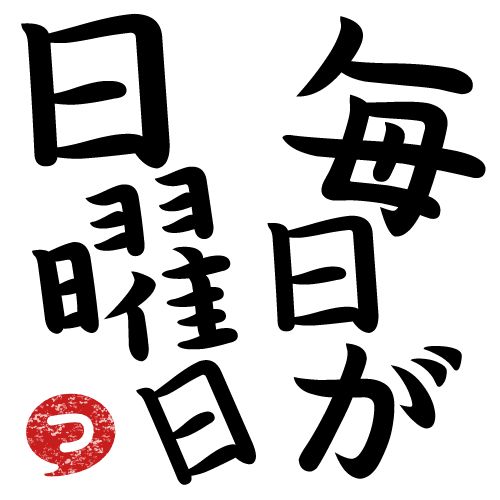
Today is Sunday…. 日曜日 it is.
Some mornings I’ll randomly search a word to see what comes up. When I begin exploring, I start with an image search. You never know what you’ll find so if you’re nervous or a highschool/homeschool student you should employ strong filters.
Today I expected these:
- cute planner icons,
- animated gifs of Kanji stroke order,
- some youtube videos for the days of the week,
- even a song…
- but then I found it. This book:

Did I know anything about this book or author before today? – No… let’s dive in
This image has so much for a self study learner or an upper beginning/ intermediate Japanese teacher
- Katakana: There are 3 katakana words to decipher.
- Author: His name contains several high frequency kanji and a good discussion of the birth order naming of boys can happen here.
- Title: Written vertically. All high frequency kanji, high frequency words, a particle, the verb is missing as it can be inferred. Most students, even in the first semester, may be able to tease out the meaning.
- Image: what could we guess this person is doing and why? Can you name the items in this image or say what the man is doing in Japanese?
- Oversized words: A high frequency kanji here, and a good time to use the “kanji look-up feature” on jissho.org
I’ve never heard of this book nor this author before… after a google+wikipedia investigation I’ve discovered Saburo Shiroyama was the pen name of Eiichi Sugiura (1927-2007)… an economics professor.
Saburo Shiroyama is the pen name used by Eiichi Sugiura, a former professor of economics. He wrote a biographical novel, Brave and Fearless, about the life of Shibusawa Eiichi, a leading businessman during the Meiji period who played a role in founding the Daiichi National Bank to provide assistance to Japanese industry. For much of the post-war period Japanese business has been bedevilled by the Sokaiya or corporate racketeers but was not until the late 1950s that the name Sokaiya came into general use following the publication of Shiroyama’s novel Sokaiya Kinjo (or Kinjo the Corporate Bouncer) depicting the power plays that mar shareholders’ meetings. One of his few books to be translated into English is The Takeover which concerns the fate of a family run department store, in a fashionable area of Tokyo, which has difficulty in raising capital.
https://projects.exeter.ac.uk/RDavies/bankfiction/japan.html

I also discovered a new genre of novels (new to me) Bank Fiction and Japanese Business Novels which have been popular since the 1950s. In film format, this genre is considered the equivalent of Hollywood cowboy movies – a standard post war film genre. Very few of Shiroyama’s books have been translated into English, so it may be why I have not heard about him. Here is a site though if you want to know of more authors in this genre: https://projects.exeter.ac.uk/RDavies/bankfiction/japan.html
And with this bit of knowledge I dove into the blog where I found this book posted in 2018: https://ameblo.jp/takeshi1960/entry-12388758851.html. The author seems to still be posting today and lives in Tokyo.
For my students, I encourage them to read social media posts, comments and blogs in Japanese. The styles of writing are much different than what they’ll find in textbooks. For me, I feel an instant acceptance into the author’s in-group, where they speak informally and directly rather than keeping me at a formal distance. Hover dictionaries, like the chrome extension Rikaikun, lets me quickly scan the whole blog post to see if there is anything I don’t know or want to explore further. Some days I want to spend more time with these newly discovered blogs, other days I’m satisfied to have learned something new and can go about my day.
As for the rest of my day…. I need to finish grading summer semester finals.
Leave a Reply